---
title: "Diversify Your E-Commerce: Why Amazon-Only Strategies Fail"
description: Discover why e-commerce brands are diversifying beyond Amazon in 2026 to boost revenue, manage risks, and enhance customer loyalty with multi-channel strategies.
image: https://www.ecomdiversify.com/hubfs/hero%20for%20blog%203.webp
---
- [Back to Home](https://www.ecomdiversify.com)
- [Contact Us](https://www.ecomdiversify.com/contact)
- [Back to The EDS Blog](https://www.ecomdiversify.com/eds-blog)
# Amazon vs. Multi-Channel Strategy: Why Smart E-Commerce Brands Are Diversifying in 2026
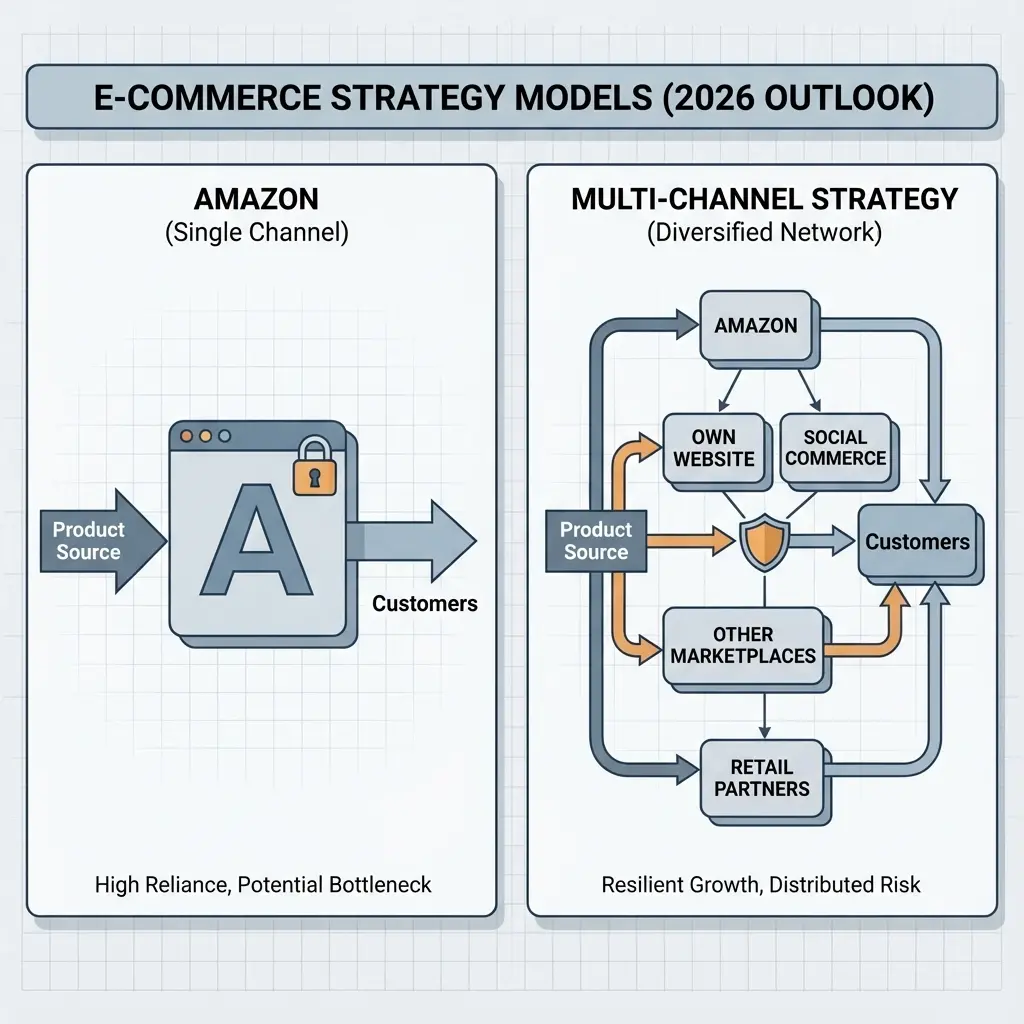
> **The Bottom Line:** Amazon-only strategies worked when online shopping was simpler. Today, 73% of consumers shop across multiple channels, and brands selling on three or more platforms see 190% higher revenue growth. The question isn't whether to diversify: it's how to do it without creating operational chaos.
---
## Why Amazon Alone Stopped Being Enough
Amazon remains the largest e-commerce platform, but relying on it exclusively creates three major problems for established brands.
First, you're competing in Amazon's ecosystem on Amazon's terms. Algorithm changes, fee increases, and policy shifts happen without warning. When Amazon decides to launch a private label product that competes with yours, or when they change their advertising costs, your entire business model shifts overnight.
Second, customer acquisition costs on Amazon have increased significantly. What used to cost $10 to acquire a customer now costs $25 or more in competitive categories. The platform has matured, and with maturity comes higher competition and higher costs.
Third, Amazon customers aren't necessarily your customers. You don't own the relationship, the email list, or the data. When a customer buys from you on Amazon, Amazon retains control of that customer's future purchase decisions through recommendations, reviews, and email communications.

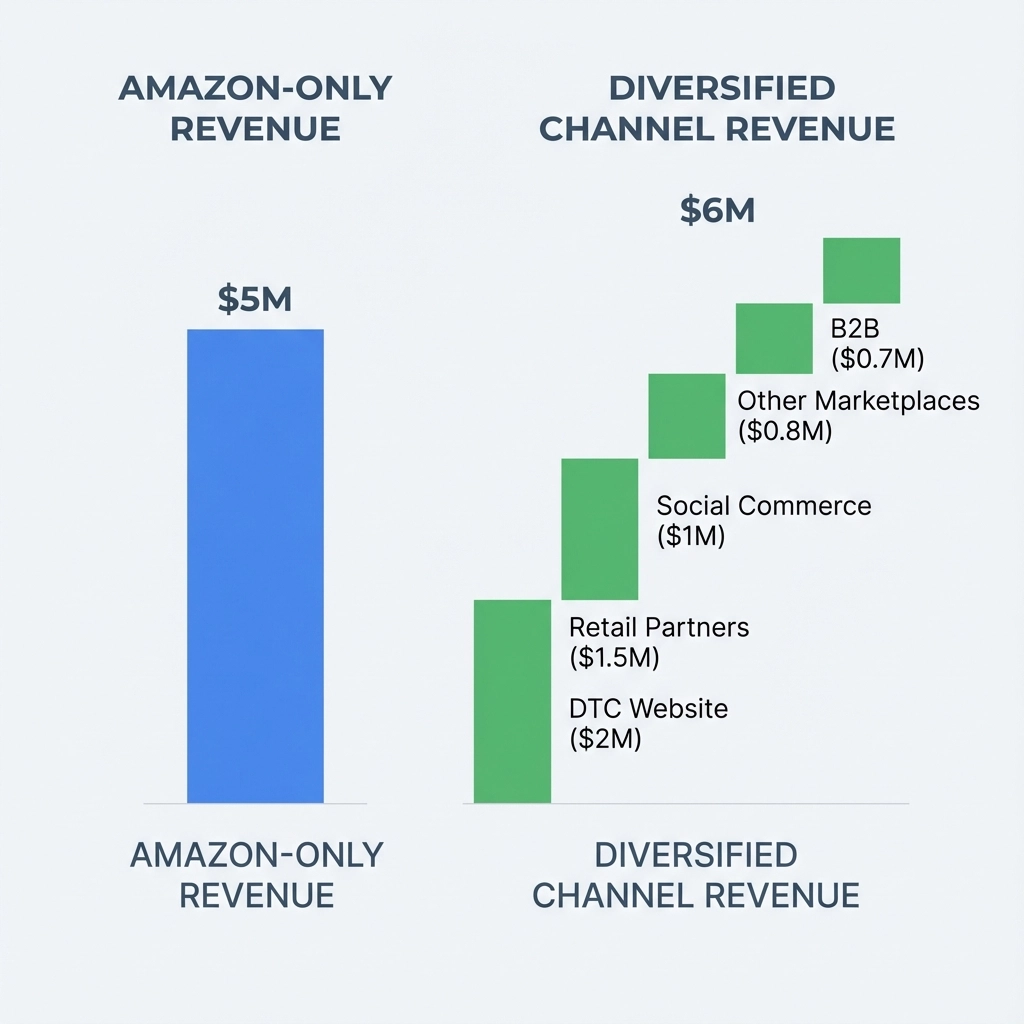
The data supports this shift. Research shows that selling across three or more channels can increase sales by as much as 190% compared to single-channel operations. More importantly, 73% of consumers now use multiple channels during their shopping journey. This means Amazon-only brands are missing opportunities with nearly three-quarters of their potential customer base.
---
## Where Smart Brands Are Going Instead
**Ecommerce multi channel strategy** isn't about being everywhere: it's about being where your customers actually shop and buy.
**Direct-to-Consumer (Shopify/Own Website)**
Your own website gives you complete control over pricing, customer data, and brand experience. The challenge is driving traffic without relying on marketplaces for discovery. Successful brands solve this by building email lists, investing in SEO, and creating content that brings customers directly to their site.
The operational benefit is higher margins. Without marketplace fees, your profit per sale increases by 8-15%. Over thousands of orders, this adds up to significant revenue that can be reinvested into growth.
**Wayfair and Specialized Marketplaces**
**How to sell on Wayfair** depends on your category, but the platform works particularly well for home goods, furniture, and decor brands. Wayfair's application process is more selective than Amazon's, but approved sellers often see better margins and less direct competition.
The key difference is customer intent. Wayfair customers are specifically shopping for home goods, while Amazon customers might be buying anything from groceries to electronics. This focused intent often leads to higher conversion rates and better customer lifetime value.
**Traditional Retail Partnerships**
**Get products into retail stores** requires a different approach than online marketplaces, but the payoff can be substantial. Retail partnerships provide brand credibility, local market access, and revenue that doesn't depend on digital advertising costs.
The challenge is operational complexity. Retail buyers expect specific packaging, pricing structures, and delivery schedules that differ from e-commerce operations. But established brands with proven products often find retail partnerships more profitable than online channels once the initial setup costs are covered.
---
## The Operational Reality of Multi-Channel Selling
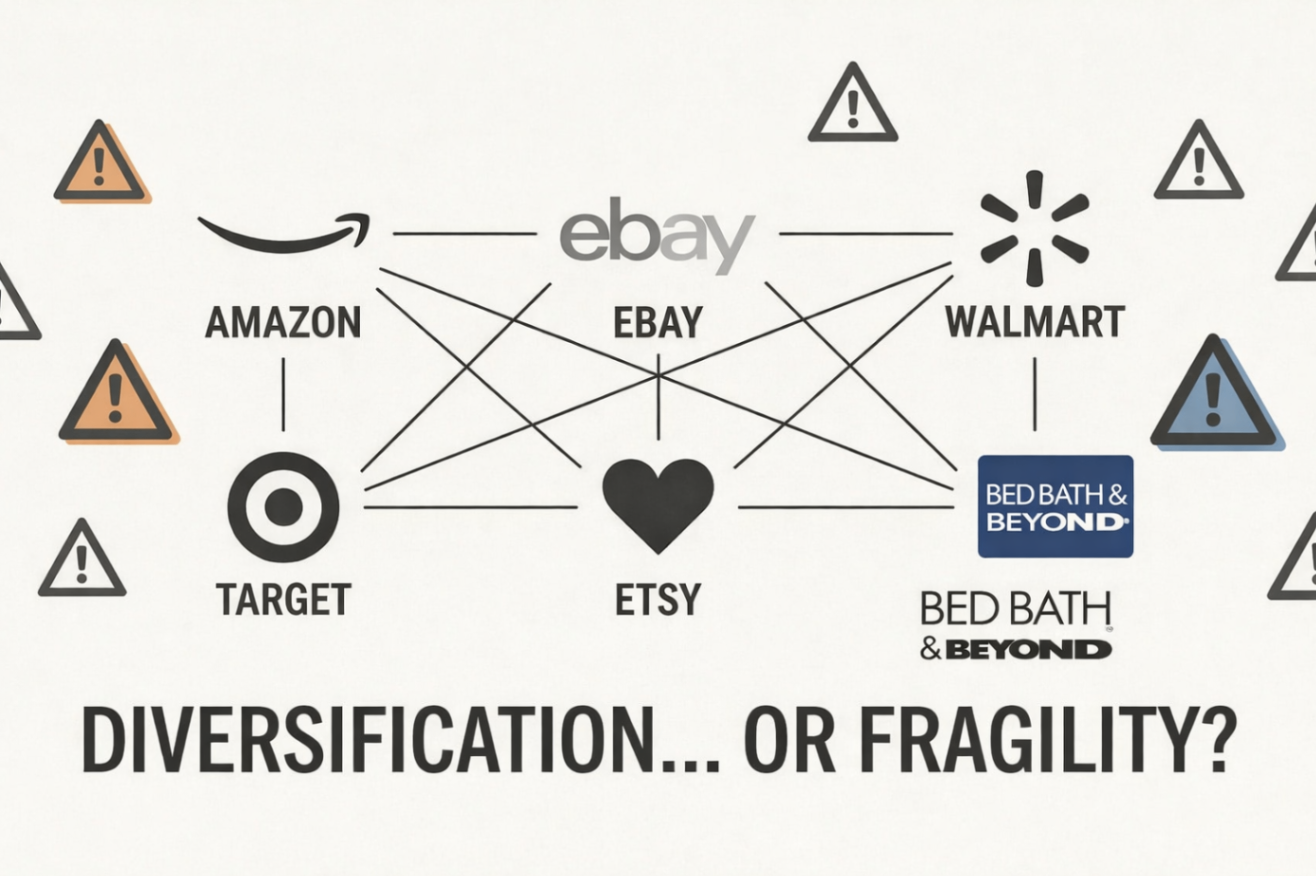
Multi-channel selling creates inventory, fulfillment, and customer service challenges that Amazon-only sellers don't face.
**Inventory Management Across Channels**
The biggest operational challenge is keeping inventory synchronized across platforms. Running out of stock on Amazon while having inventory available on your Shopify store creates lost sales and customer confusion.
Successful multi-channel brands solve this with centralized inventory management systems that automatically update stock levels across all channels. Some use Amazon's Multi-Channel Fulfillment (MCF) to handle orders from other platforms using Amazon's warehouses. Others work with third-party logistics providers that specialize in multi-channel operations.
**Pricing and Promotion Coordination**
Different channels have different fee structures, customer expectations, and promotional calendars. A product that's profitable at $49 on your website might lose money at the same price on Amazon after fees.
Smart brands develop channel-specific pricing strategies that account for platform fees, customer acquisition costs, and brand positioning. This requires sophisticated spreadsheet work or pricing software, but it's essential for maintaining profitability across channels.
**Customer Service Complexity**
When customers can buy from you on Amazon, your website, and retail stores, they expect consistent service regardless of where they made their purchase. This means your customer service team needs access to order information across all channels and clear protocols for handling returns, exchanges, and warranty claims.

---
## When Multi-Channel Makes Sense (And When It Doesn't)
Not every brand should diversify immediately. Multi-channel selling works best for established brands that have already proven product-market fit and operational competence on their primary channel.
**You're Ready When:**
- Your Amazon business generates consistent monthly revenue
- You have reliable inventory forecasting and supplier relationships
- Your customer service processes are documented and scalable
- You understand your unit economics across different price points
**You Should Wait If:**
- You're still figuring out your core product offering
- Your Amazon account faces policy violations or performance issues
- Your cash flow is unpredictable or tight
- You don't have systems to track performance across channels
The mistake many brands make is diversifying too early. Getting multi-channel operations right requires operational maturity that comes from successfully managing a single channel first.
---
## Building Your Multi-Channel Strategy
**Start with Adjacent Channels**
If you sell home goods on Amazon, Wayfair is a logical next step. If you sell consumables, your own Shopify store with subscription options makes sense. Choose channels where your existing customer base is likely to shop.
**Invest in Infrastructure Before Marketing**
Multi-channel success depends more on operational excellence than marketing creativity. Set up inventory management, customer service protocols, and performance tracking before spending money on new channel marketing.
**Test with Limited SKUs**
Don't launch your entire catalog on new channels immediately. Start with your top-performing products and expand based on performance data. This reduces complexity while you learn how each channel works.
---
## The Real Cost of Staying Amazon-Only
Brands that don't diversify face increasing risk as Amazon's marketplace becomes more competitive and expensive. But the bigger risk is missing the opportunity to grow your ecommerce business through channels where you have more control and better margins.
The customers who shop on multiple channels aren't just buying more: they're also more loyal and have higher lifetime values. These are the customers who will sustain your business through economic downturns and competitive pressure.
**Alternatives to selling on amazon** exist, but they require operational discipline and strategic thinking. The brands that succeed with multi-channel strategies are those that approach it as an operational challenge, not just a marketing opportunity.
---
Multi-channel selling isn't about being everywhere: it's about being strategic about where your customers shop and building the operational foundation to serve them well across those channels. For established brands ready to [grow their ecommerce business](https://www.ecomdiversify.com/retail-readiness-what-you-need-to-know) beyond Amazon's limitations, diversification is both a growth opportunity and a risk management strategy.
If your brand is generating consistent revenue and you're ready to explore multi-channel opportunities, we help established e-commerce companies build and manage diversified sales strategies that reduce platform risk while increasing profitability. [Learn more about our approach](https://www.ecomdiversify.com/services) to strategic channel expansion.
.webp)
- [Home](https://www.ecomdiversify.com)
- [About Us](https://www.ecomdiversify.com/about)
- [Services](https://www.ecomdiversify.com/services)
- [Retailers](https://www.ecomdiversify.com/our-retailers)
- [Contact Us](https://www.ecomdiversify.com/contact)
-
-
-
- [Terms of Service](https://www.ecomdiversify.com/terms-of-service)
- [Privacy Policy](https://www.ecomdiversify.com/privacy-policy)
©2026 EcomDiversify - All Rights Reserved.
Powered by [Bluesoft Design.](https://www.bluesoftdesign.com)
```json
{
"@context" : "https://schema.org",
"@type" : "BlogPosting",
"author" : {
"@type" : "Person",
"name" : "Rick Mirsky",
"url" : "https://www.ecomdiversify.com/eds-blog/author/rick-mirsky"
},
"dateModified" : "2025-12-24T22:36:38.465Z",
"datePublished" : "2025-12-24T07:01:03.000Z",
"headline" : "Diversify Your E-Commerce: Why Amazon-Only Strategies Fail",
"image" : [ "https://www.ecomdiversify.com/hubfs/hero%20for%20blog%203.webp" ],
"mainEntityOfPage" : {
"@id" : "https://www.ecomdiversify.com/eds-blog/amazonvmultichannel",
"@type" : "WebPage"
},
"publisher" : {
"@type" : "Organization",
"logo" : {
"@type" : "ImageObject",
"url" : "https://www.ecomdiversify.com/hubfs/ECOM%20DIVERSIFY%2010-01-4.png"
},
"name" : "Ecom Diversify"
}
}
```